
- Home
- Industries
Pharmaceuticals
Pharmaceutical Process Technology and Hygienic Powder Control
End-to-end solutions connecting thin film evaporation, wet granulation, and drug pelleting with GMP-compliant source capture and pharmaceutical dust containment. Protecting people and product from first particle to final dose.
The Challenge
Combined Pressure on Modern Pharmaceutical Manufacturing
Pharmaceutical manufacturers must simultaneously deliver consistent product quality, protect operators from API exposure, and satisfy increasingly stringent GMP and regulatory requirements across the entire process chain.
Thermally sensitive products, solvents, potent APIs, and fine powders require tightly controlled processing. Inconsistent concentration, drying, or particle formation directly affect downstream handling, containment, and dosage performance.
Dispensing, transfer, and powder-handling steps expose operators to active pharmaceutical ingredients. Inadequate source capture increases exposure risk, cross-contamination potential, and cleaning burden across the facility.
Stricter GMP expectations, occupational exposure limits, and cleaning validation requirements demand equipment designed for containment, documentation, and predictable performance across multi-decade production assets.
Two Brands. One Concept.
From process to powder.
From granule to clean air.
Every pharmaceutical process combines two critical dimensions: how the product is formed, and how powders are handled once they exist.
API concentration and solvent distillation
Drying, granulation, and drug pelleting
Raw material dispensing and powder feeding
Hygienic dust capture and powder recovery

Nederman MikroPul
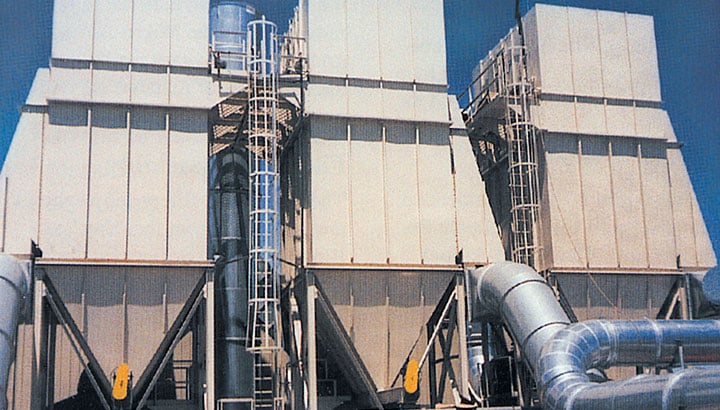
Pharmaceutical Dust Collection & Hygienic Powder Containment
Pharmaceutical dust collection is the engineered source capture and containment of airborne API particles at powder-release points including dispensing, charging, transfer, and discharge from dryers and granulators. Unlike industrial dust collection, pharmaceutical systems must satisfy GMP hygienic construction standards, cleaning validation requirements, operator OEL protection, and cross-contamination prevention across multi-product facilities.
- Hygienic construction — smooth surfaces for GMP cleaning validation
- Smooth internal geometries minimize powder hold-up and residue build-up
- Source capture at dispensing, charging, transfer, and dryer discharge points
- OEL-matched containment for standard APIs and highly potent compounds
- Explosion-protection integration for combustible or flammable powders
- Shorter batch changeovers through simplified, validated cleaning design
LCI Corporation
Extrusion-Spheronization & Drug Pelleting
Extrusion-spheronization is a pharmaceutical pelletization process that converts wet-granulated API-excipient masses into uniform, spherical pellets with narrow particle-size distributions (typically 0.5–2.0 mm). The process combines extrusion through a precision die plate with spheronization on a rotating friction plate, producing pellets with high API loading, excellent flowability, and consistent mechanical strength — ideal for controlled-release, modified-release, and multiparticulate dosage forms.
- High active-content pellets — API loading above 90% achievable
- Narrow particle-size distributions for uniform functional film coating
- Excellent pellet flowability and mechanical strength
- Supports controlled-release and modified-release dosage forms
- Reduced variability during transfer, charging, and capsule filling
- Reliable linear scale-up from development to commercial scale

LCI Corporation
Wet Granulation & Precision Powder Feeding
Wet granulation is a particle-size enlargement process that converts fine pharmaceutical powders into free-flowing granules by agglomerating primary particles with a granulating liquid under controlled shear conditions. The resulting granules exhibit improved density, compressibility, and API content uniformity compared to raw powders — directly reducing tablet weight variation and simplifying downstream powder handling and containment.
- Predictable granule density and particle size for tablet compression
- Improved API content uniformity across the entire batch
- Significantly reduced dust generation — simplifies downstream containment
- Accurate, low-rate powder feeding for continuous pharmaceutical manufacturing
- Controlled dosing of difficult, cohesive, or poorly flowing API materials
- Improved mass-flow stability prior to compaction or tablet compression
LCI Corporation
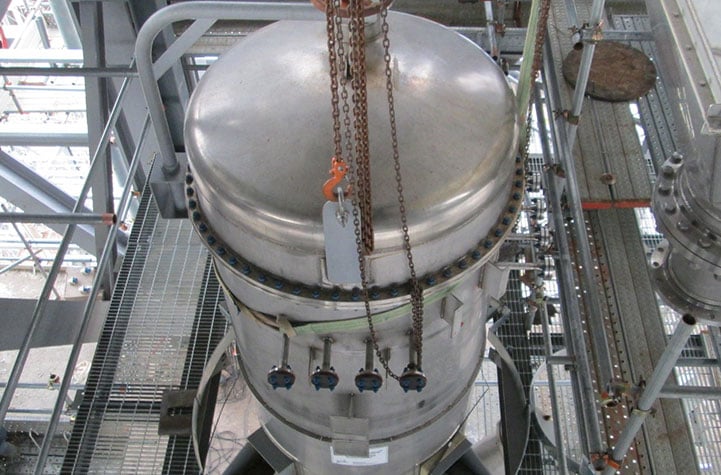
Thin Film Evaporation for Pharmaceutical API Concentration
Thin film evaporation is a continuous pharmaceutical process technology used to gently concentrate APIs, remove residual solvents from heat-sensitive molecules, and purify biological or chemical intermediates. A thin product film is spread across a heated surface under controlled vacuum conditions, enabling highly efficient solvent removal with minimal thermal stress and very short product residence times — typically seconds to minutes.
- Short residence times protect thermally labile and oxygen-sensitive molecules
- Efficient heat transfer for precise, consistent concentration targets
- Uniform thermal profiles prevent localized degradation and hot spots
- Continuous operation supports real-time PAT integration
- Linear scale-up from pilot to full commercial pharmaceutical production
Technology Overview
Pharmaceutical Process Technology Comparison
Selecting the right pharmaceutical process technology depends on your product characteristics, target dosage form, API potency, and containment strategy.
| Technology | Primary Application | Key Output | Dosage Forms | Provider |
|---|---|---|---|---|
| Thin Film Evaporation | API concentration, solvent removal, extract purification | Concentrated liquid or paste at precise solids content | Injectable, liquid, lyophilized, oligonucleotide | LCI Corporation |
| Wet Granulation | Powder densification, agglomeration, and flowability improvement | Free-flowing, compressible granules | Tablets, hard-shell capsules | LCI Corporation |
| Extrusion-Spheronization | High-API spherical pellet production | Spherical pellets (0.5–2.0 mm, narrow PSD) | Modified-release capsules, multiparticulates, sachets | LCI Corporation |
| Drug Pelleting (Rotor-Disk) | Starter-bead layering and functional coating | Uniformly coated spherical pellets | Controlled-release capsules, sachets | LCI Corporation |
| Pharmaceutical Dust Collection | Source capture at all powder-release points in the facility | Clean GMP environment + recovered product | All solid oral and API manufacturing | Nederman MikroPul |
Common things to know
Frequently Asked Questions
Answers to the most common questions about pharmaceutical extrusion-spheronization, thin film evaporation, wet granulation, and GMP dust collection.
Loading component...
Loading component...
Loading component...
Loading component...
Loading component...
Loading component...
LCI Test Center — Charlotte, NC
Accelerate Your Pharmaceutical Process Development
The LCI Test Center connects laboratory development with full-scale commercial production — enabling validated, predictable scale-up and regulatory-grade process documentation from a single partner.
Validate process solutions with real materials on full-scale equipment — not scale-down simulations
Conduct pilot-scale trials for evaporation, drying, granulation, extrusion-spheronization, and drug pelleting
Generate qualification samples and scale-up datasets for commercial design and regulatory submissions
Enable linear scale-up from lab through pilot to commercial — reducing development risk and timeline
Expert process engineering support from LCI throughout development, testing, and scale-up activities
Long-Term Partnership
Support Across the Full Project Lifecycle
The Nederman Group provides long-term partnership support from initial concept through operational optimization — protecting availability and compliance across multi-decade pharmaceutical manufacturing assets.
Defining pharmaceutical process and containment concepts from the outset of project development.
Implementing integrated solutions from product formation to powder control and containment.
Maintaining consistent performance in demanding pharmaceutical GMP manufacturing environments.
Maintaining process and containment performance stability over the full installation lifetime.
Adapting systems as products, volumes, and regulatory requirements evolve over time.