- Home
- Industries
- Metals
Galvanizing
Nederman MikroPul is a globally recognized manufacturer of advanced dust control and exhaust gas treatment systems for industrial applications. Its solutions address a wide range of processes, including dust collection in galvanizing plants, furnace operations, foundries, and general industrial environments. Leveraging extensive expertise, a comprehensive portfolio of technologies, and a strong global presence, the company delivers high-performance solutions for the galvanizing process.
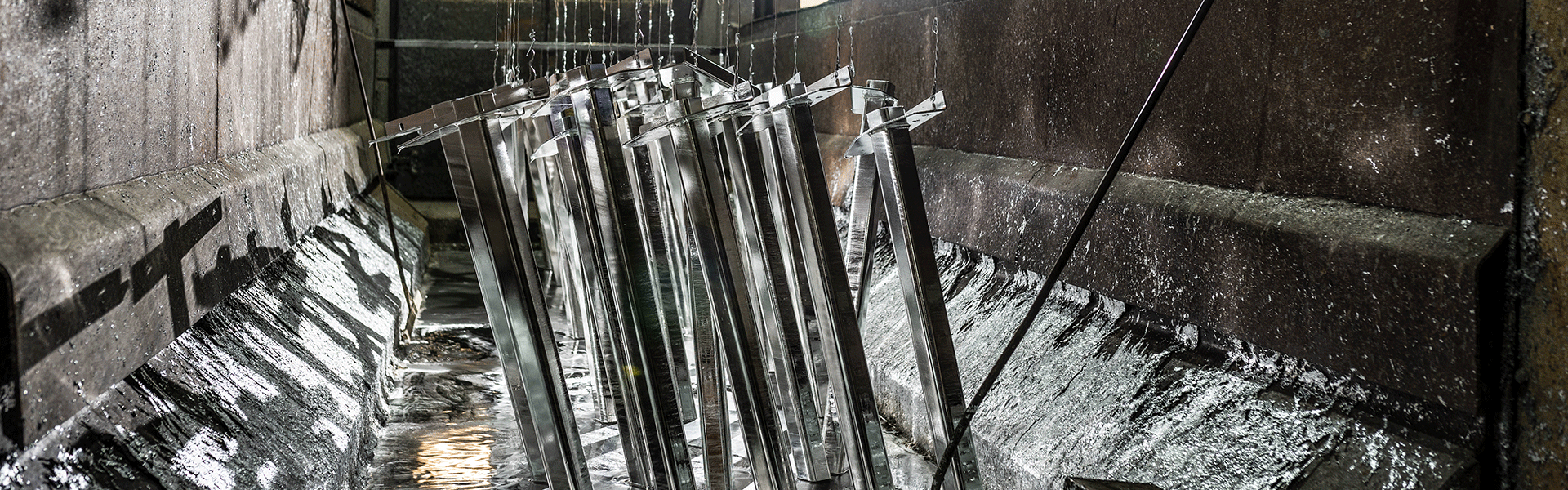
In the galvanizing industry, the processes that pose the greatest challenges to environmental sustainability and occupational health are associated with hot-dip galvanizing. This involves immersing components in molten zinc baths within furnaces, generating significant emissions—particularly smoke and particulate matter. These emissions require effective mitigation strategies to ensure compliance with environmental standards and to safeguard worker health.
The most suitable technology for capturing emissions generated during hot-dip galvanizing is a baghouse dust collector. These systems are equipped with specially engineered filter bags manufactured from materials carefully selected to withstand the specific conditions of the process.
The filter media has resistance to extreme temperatures, corrosive compounds, and abrasive particulates. Also, the entire dust collection system must be designed for continuous operation. A critical for continuous operation is the filter bag cleaning system, which operates automatically and maintains consistent performance without interrupting system functionality.
When properly designed and constructed, such dust collection systems provide reliable operational performance, enhance environmental protection, and contribute significantly to maintaining a safe and healthy working environment.
The implementation of fume extraction systems in galvanizing plants delivers highly effective results, often achieving emission levels below 5 mg/Nm³. In practical terms, these systems play an important role in reducing industrial air pollution and mitigating the broader impact of smog.
In addition, modern systems are equipped with industrial fans featuring integrated frequency converters (inverters) as a standard component. This capability allows for precise performance control, optimizing energy consumption and resulting in measurable cost savings over time.