Operational
Dusty environments cause continuous loss. Excessive dust results in:
- Loss of valuable product
- Equipment wear and abrasion
- Housekeeping challenges
- Reduced visibility and unsafe conditions
- Process inefficiencies
Mining
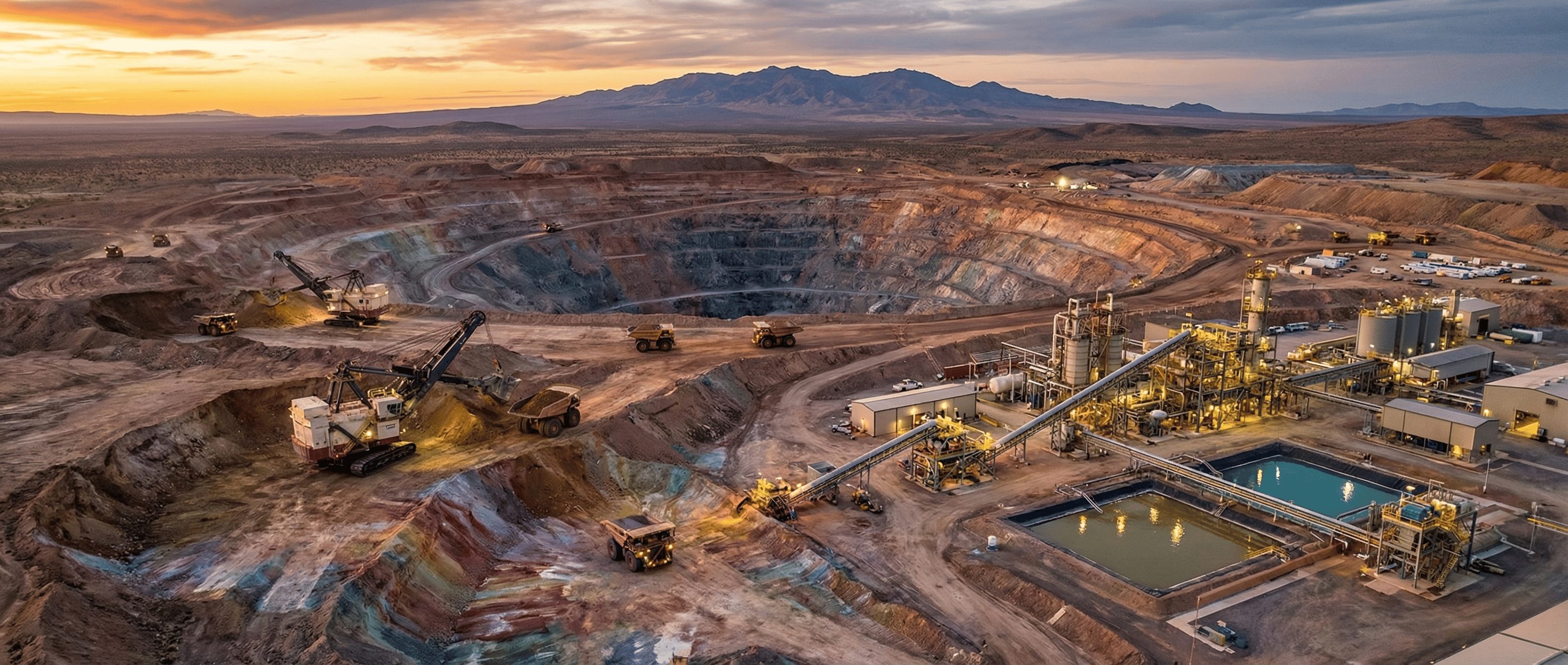
Every mining operation is unique. With extensive field experience and application expertise, MikroPul delivers reliable, durable, and high-performance dust collection systems designed specifically for the realities of mining and mineral processing.
Common things to know
Mining dust control questions
Fill in this short form and you'll instantly get the brochure.
Last updated: July 2026
The pressure on modern mines
Today's mines and quarries operate under combined operational, financial and regulatory pressure. Crushing, screening, conveying and loading continuously generate airborne particulate — and every gramme that leaves the process is product, profit and compliance lost.
Dusty environments cause continuous loss. Excessive dust results in:
Dust emissions hit profitability directly through:
With residential developments closer than ever, tolerance for visible dust is low. Authorities expect:
Budgetary constraints make it critical to invest correctly. It is generally better to execute selected areas properly than to under-design multiple areas and live with ongoing performance issues. Efficient dust control protects both the environment and the workforce.
| Parameter | Typical limit |
|---|---|
| Coarse particulate (ambient) | 35 µg/m³ |
| Fine particulate (ambient) | 15 µg/m³ |
| Total dust (workplace) | 15 mg/m³ |
| Respirable dust (workplace) | 5 mg/m³ |
| Crystalline silica (NIOSH PEL) | 0.05 mg/m³ |
Emission hotspots across the process
Effective dust control needs a systematic view of the whole operation. Rather than chasing isolated collectors, MikroPul identifies where dust is generated and applies targeted capture and filtration — handled as four connected stages.
Collectors placed directly at emission points — crushers, screens, conveyor transfers, truck and rail dumps, bin vents and loading stations — engineered around airflow, material and layout.
The optimal concept is chosen from dust loading, particle size, moisture, temperature and abrasiveness — setting filter media, air-to-cloth ratio, airflow and cleaning method for stable performance.
Collected dust is managed to avoid blockages, abrasion, secondary emissions and excessive maintenance — discharged via hoppers, screw conveyors or returned directly to process.
Filtered air is discharged in compliance with environmental regulations while plant operations stay stable and predictable.
Choosing the right concept
Mining dust control is built on one of two approaches. The right choice depends on plant layout, material handling, the value of recovered product and your operational philosophy — both deliver effective emission control when engineered correctly.
Source collection
Collectors sit directly at crushers, transfers, screens or bin vents, capturing dust where it is generated and often returning recovered material straight to the process stream.
Central collection
Multiple sources are ducted to one larger collector, treating several process points in a single filtration system with a centralized disposal concept.
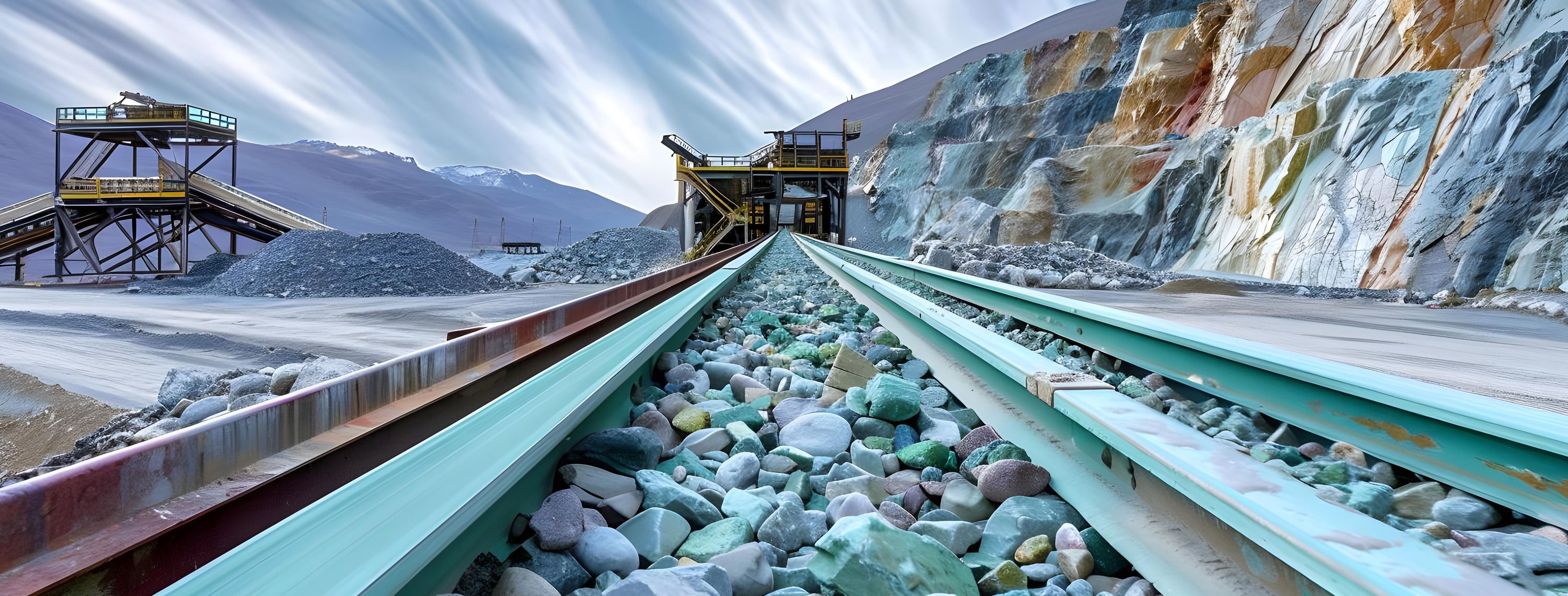
Nederman MikroPul has extensive experience supplying dust control to mining and mineral processing operations handling:
Guidelines for practical dust control
Years of field experience in mining and quarry applications point to a handful of principles that separate a system that performs from one that disappoints.
Good design and proper equipment selection are essential. Marginal design decisions quickly result in inadequate collector performance that is difficult and costly to correct later.
Conveyor transfer points, crushers, screens, oversized feed-outs and bin transfers are all significant dust sources. Capture is engineered where material is handled, not where it is convenient.
Budget matters. It is better to execute targeted solutions correctly than to implement broad but ineffective systems across the whole plant and live with ongoing performance issues.
A broad installation base across crushers, screens, ball mills, truck dumps, conveyor transfers, bin filling, product loading and autoclaves turns field experience into reliable, durable systems..

Core air pollution control equipment
The optimal technology is selected from the characteristics of the process dust and the operating environment. Five core collector families cover the range of mining and mineral-processing duties.
Versatile filtration for demanding dust loads
Engineered inlet technology distributes airflow evenly across the filter bags; periodic compressed-air pulse cleaning removes the dust cake and holds a stable pressure drop for continuous performance.
RAF II & RAF-IS — reliable cleaning without compressed air
Bags are cleaned sequentially using a reverse-air principle. The RAF II design gives continuous cleaning at a low pressure drop, reducing fan load and extending bag life. The RAF-IS variant is configured specifically for coal handling and combustible-dust applications.
For sticky, humid or combustible atmospheres
Dust-laden gas contacts water or another scrubbing liquid so particles are captured and removed — well suited where dry filtration is difficult, and able to control certain gaseous pollutants at the same time.
Robust coarse-particle pre-separation
Dust-laden gas enters tangentially; centrifugal force drops heavier particles into the hopper while cleaned air exits. Often used ahead of filtration to cut the dust load on downstream equipment.
Compact, high-efficiency capture for smaller airflows
Pleated cartridge elements deliver high filtration efficiency in a small footprint — well suited to space-constrained, localised dust collection with easy filter access and maintenance.
Total cost of ownership
Well-designed dust control protects uptime, optimises cost and secures compliance. The value shows up across three areas over the life of the plant.
Focusing on the most critical emission points — crushers, screens, conveyor transfers and load-out stations — and correctly sizing equipment avoids unnecessary investment in oversized systems.
Airborne dust is lost product. Effective capture returns valuable material to the process stream, increasing recoverable yield.
Optimised airflow and efficient filtration hold a low pressure drop and reduce fan energy.
Robust design and reliable discharge reduce abrasion, prevent blockages and extend filter life.
Reliable dust control improves plant stability across crushing, screening, conveying and loading. By reducing dust accumulation and protecting equipment, well-designed systems help prevent production interruptions and support safe working conditions.
Long-Term Partnership
From first study to upgrade, Nederman MikroPul supports the asphalt plant across its full lifecycle.
Pre-studies, profitability calculations and detailed planning to define the right concept for your foundry.
Construction, installation and commissioning of complete systems.
Maintenance, troubleshooting and on-call service to keep equipment running.
Continuous monitoring of key parameters, to provide early warnings and prevent unplanned downtime.
Performance upgrades, retrofits and extensions as capacity or regulatory requirements change.
Based on installation data, it has been estimated that up to 1% of total mining throughput can be lost to the surrounding environment. In a 700 TPH quarry, that is roughly seven tons per hour from conveyors, crushers and screens — before stockpile losses are counted. Effective capture returns much of this valuable material to the process stream.
It depends on plant layout, material handling, the value of recovered product and your operational philosophy. Source collection places collectors at each emission point — less ductwork, lower capital cost and easier maintenance, and ideal when recovered dust has product value. Central collection ducts several sources to one larger collector, simplifying monitoring and suiting centralized disposal. Both control emissions effectively when engineered correctly.
he right choice comes from the dust and operating environment. Mikro-Pulsaire® pulse-jet collectors handle demanding loads with stable pressure drop; RAF reverse air filters clean without compressed air and are proven for coal and combustible dust; wet scrubbers suit sticky, humid or combustible atmospheres; cyclones pre-separate coarse particles; and cartridge collectors give compact, high-efficiency capture for smaller airflows. MikroPul engineers select filter media resistant to abrasion and blinding.
Typical figures such as 35 µg/m³ for coarse and 15 µg/m³ for fine ambient particulate, 15 mg/m³ total and 5 mg/m³ respirable workplace dust, and a NIOSH crystalline-silica PEL of 0.05 mg/m³. Limits are often lower in non-attainment areas and where silica is present. Always confirm the values that apply to your specific site and jurisdiction.
In our experience to make a mining dust control system work at peak performance there are a few core principles: dust is generated anywhere material falls through air, so capture must target the real sources — conveyor transfer points, crushers, screens, oversized feed-outs and bin transfers. Good design and proper equipment selection are essential, because marginal design decisions quickly result in inadequate collector performance. And budget is best spent on targeted solutions executed correctly rather than broad but ineffective systems.
Extensive experience spans iron ore, nickel, copper, gold, silver, lead and zinc, bauxite and aluminum, coal, diamond, potash and molybdenum. Each material's stickiness, abrasiveness, particle-size distribution, moisture, dust loading and temperature is evaluated together with plant layout to determine the optimal solution.
Connect with Nederman MikroPul for mining dust collection solutions.
Protecting People, Uptime, Performance with Nederman MikroPul. Thousands of Installations Worldwide