Cyclone Separators

Industrial cyclone separators

Remove coarse, dry particulate from process gas with no filter media and no moving internal parts. Use a cyclone as a low-cost standalone collector, or as a pre-separator that protects your final filter.

Cyclone pre-separators

What is it

What is a cyclone separator?

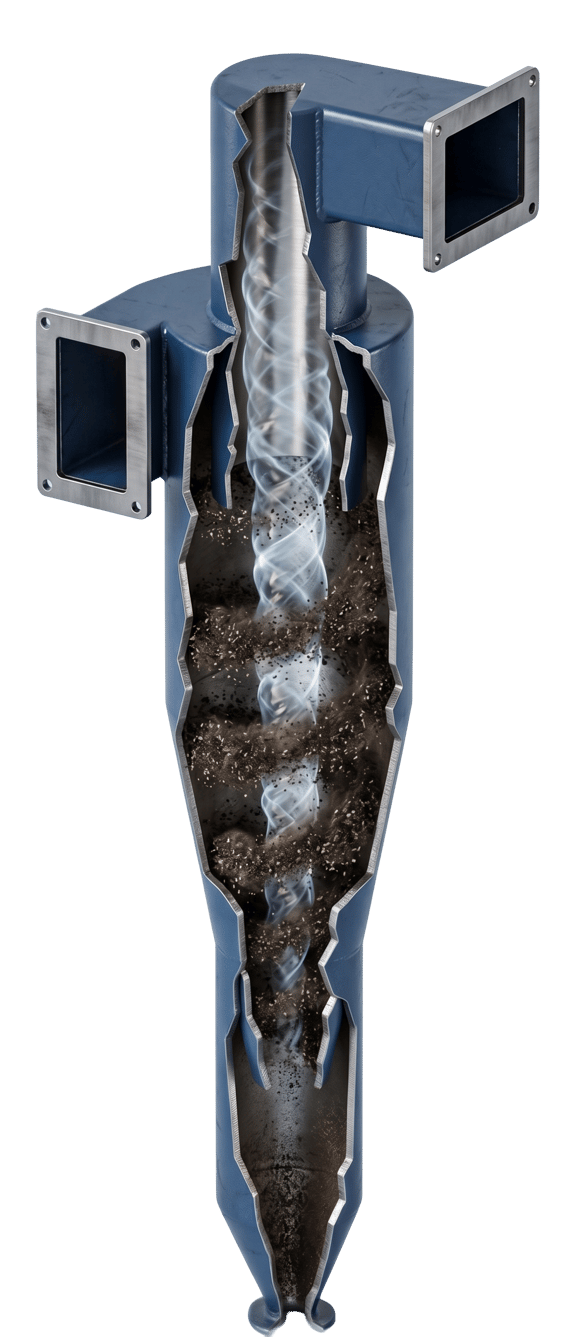
A cyclone separator, also called a cyclonic separator, cyclone collector or inertial separator, removes particulate from a gas stream by spinning it. Gas enters tangentially and forms a vortex. Heavier particles are thrown to the wall and fall to a dust outlet, while cleaned gas leaves through a central outlet at the top.

Inertial separators are the simplest type of dust collector. They are used to reduce the volume of particles in an air or gas stream, or as a pre-separator ahead of collectors that achieve higher efficiencies. Nederman MikroPul high efficiency cyclone dust collectors are a cost-effective way to separate dry particulate larger than 5 microns (0.2 thousandths of an inch) from gas streams.

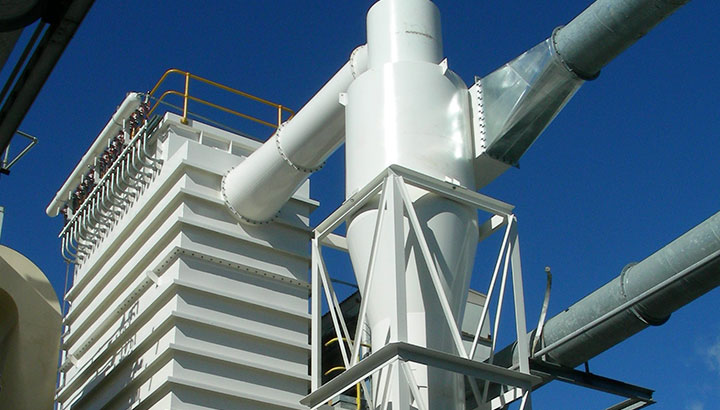
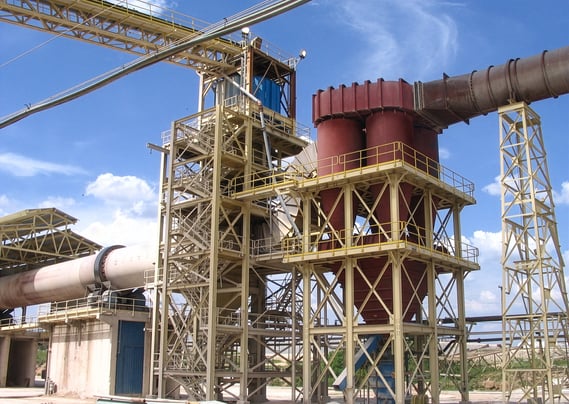
cyclone quad-hres

Why should you choose a cyclone separator

Engineered around
your process

Cyclones are among the simplest and most economical dust collectors to buy, install and run.

Abrasive, hot, sticky or corrosive dust needs more than a standard vessel. Nederman MikroPul can custom design these enhancements as required.

When is a cyclone most effective?

When the dust in the gas is dry and larger than 5 microns (0.2 thousandths of an inch).

For finer particulate or tight emission limits, pair the cyclone with a baghouse dust collector or a wet scrubber as the final stage.

ASME coded construction
Ease of access
Internal surface finishes to minimize abrasion
Body flanges
Refractory lining for wear or high temperatures
Stainless steel or more exotic alloy construction
Features to limit build-up from sticky particulate
Wear liners, fixed or removable
Low initial cost
A cyclone is a welded vessel with no filter media, so the capital outlay is modest.
Low operating expenses
There are no bags or cartridges to replace on a schedule and no cleaning system to run.
No moving internal parts
The gas flow does the work, so there is nothing inside to drive, lubricate or repair.
Minimal space requirements
A compact footprint lets you fit a cyclone in-line ahead of an existing collector.

How it works

How does a cyclone separator work?

Cyclonic separation uses the energy of the gas flow itself. There is no filter to clog and nothing inside to drive, so the whole process comes down to geometry and inertia.

cyclone-separator-no-background
  1. Dirty gas enters tangentially

    Dust-laden gas enters the upper barrel through a tangential inlet, so it starts to spin around the wall instead of flowing straight through.

  2. An outer vortex spirals down

    The gas spirals down the barrel and into the cone. As the cone narrows, the rotation speeds up and the centrifugal force on each particle increases.

  3. Particles are thrown to the wall

    Particles are denser than the gas carrying them, so their inertia carries them outward to the wall, where they lose speed and drop out of the flow. This is why cyclones are also called inertial separators.

  4. Dust leaves through the bottom

    Separated dust slides down the cone wall and discharges through the dust outlet into a hopper, conveyor or back into your process.

  5. Clean gas exits through the top

    Near the bottom of the cone the gas reverses into a tighter inner vortex. It rises up the centre and leaves through the outlet tube, often called the vortex finder.

The outer vortex carries dust down to the wall and discharge. The inner vortex carries cleaned gas up and out.

The Products

The Nederman MikroPul cyclone separator range

Three designs cover standalone collection, high-volume pre-separation and long duct runs.

Cyclone pre-separators

Cyclone dust collectors

High efficiency cyclone dust collectors for separating dry particulate larger than 5 microns from gas streams. Supplied in single, twin or quad arrangements.

Best for: standalone collection or pre-separation of dry, coarse dust

Cyclone dust collectors >


Skimmer Pre-separator

Skimmer pre-separator

A modified cyclone for high air volumes. One Skimmer can take the place of two standard cyclones, reducing the number of pre-separators you need.

Best for: pre-separation at high air volumes

View the Skimmer >

Spin Pre-separator

Spin pre-separator

A lower-cost version of a pre-separator, intended only for installations with long ductwork of more than 50 metres.

Best for: pre-separation on duct runs longer than 50 m

View the Spin pre-separator >

Configurations

Standalone collector or pre-separator?

A cyclone can be the whole collection system, or the first stage that makes the rest of your system last longer.

Complete filtration system

High efficiency cyclones as standalone collectors

High efficiency cyclones can be used as standalone filtration systems. Because they work harder to capture more of the dust, they may require more energy and have higher running costs.

They suit dry, coarse particulate where a cyclone alone meets your collection target.

First stage ahead of a final filter

Cyclones as pre-separators

As pre-separators, cyclones reduce the dust load reaching a final, more efficient filter. They also act as protective devices, removing large hot particles from the gas stream before they can damage filter media.

Lower efficiency cyclones are often more effective in this role. They let a better mix of particle sizes reach the filter, which can extend the working life of the filter bags downstream.

Which to choose

Which cyclone separator fits your application

Selection starts with your dust and your air flow: dust load, particle size, temperature, and the volume of gas you need to move.

Your situationRecommended optionWhy it fits
Dry dust above 5 µm, collected at low costHigh efficiency cyclone dust collectorWorks as the complete filtration system; may use more energy and cost more to run
Protecting a baghouse or other final filterLower efficiency cyclone as a pre-separatorRemoves large, hot particles and lets a better mix of particle sizes reach the filter media
High dust loads (50–100 gr/ft³)Large-diameter cycloneHandles heavy loading at a low pressure drop
Low dust loads needing higher efficiencyNarrow, small-diameter cycloneHigher collection efficiency, at a higher pressure drop
Pre-separation at high air volumesSkimmerOne Skimmer takes the place of two standard cyclones
Long ductwork, over 50 mSpin pre-separatorLower-cost pre-separator for long duct runs

Narrow vs large-diameter cyclones

Cyclone diameter sets the trade-off between collection efficiency, dust load and pressure drop.

 Narrow (small-diameter)Large-diameter
StrengthHigh collection efficiency at low dust loadsEfficiently handles high dust loads
Dust load0.23–13.7 g/m³ (0.1–6 gr/ft³)114.4–228.8 g/m³ (50–100 gr/ft³)
Pressure drop1.49–2.49 kPa (6–10 in w.c.)0.37–0.75 kPa (1.5–3 in w.c.)

High efficiency vs lower efficiency cyclones

High efficiency cyclones are built for standalone filtration and may need more energy to run. Lower efficiency cyclones are often the better choice ahead of a final filter or dust collector, because the wider mix of particle sizes reaching the filter can extend media life.

Skimmer and Spin pre-separators

When the job is pre-separation rather than final collection, two specialised designs can reduce equipment count or cost. The Skimmer is a modified cyclone for high air volumes, where one unit can replace two standard cyclones. The Spin pre-separator is a lower-cost option, but only for installations with ductwork longer than 50 metres.

Twin and quad cyclone arrangements

After evaluating your application, Nederman MikroPul custom selects:

  • Single, twin or quad arrangement
  • Outlet-to-inlet relationships
  • Barrel length
  • Cone length

Applications

Cyclone separator applications

Nederman MikroPul cyclones handle dry particulate across heavy industry, food and consumer goods, and pneumatic conveying.

Industrial

  • Powder coatings
  • Plastic fines
  • Sawdust
  • Chip collection
  • Iron and steel
  • Sintering
  • Pelletizing
  • Sand recovery

Mining and industrial steel

  • Crushing plants
  • Dryers
  • Material handling
  • Carbon collection
  • Metal powder
  • Potash

Consumer goods

  • Tobacco
  • Coffee
  • Cereals
  • Soybean fines

Coal

  • Pulverized coal collection
  • Chalk
  • Coal ash

Pneumatic conveying

  • Product receiving

Common things to know

Frequently Asked Questions

Answers to common questions about cyclone separators

Loading component...

Loading component...

Loading component...

Loading component...

Loading component...

Loading component...

Let's Solve Your Problems

Talk to a Process Technology Expert Today

Connect with Nederman MikroPul to improve your dust collection.

Loading component...

Last updated: September 2026