- Home
- Industries
Mining
Mining
Every mining operation is unique. With extensive field experience and application expertise, MikroPul delivers reliable, durable, and high-performance dust collection systems designed specifically for the realities of mining and mineral processing.
Proven Air Quality Expertise for Mining Operations
MikroPul is experienced in addressing both workplace and emissions-related air quality challenges in the mining industry. Mining operations are inherently dusty environments, where effective dust control is essential to:
- Reduce dust escaping into the workplace
- Separate fines from product streams
- Recover valuable material
- Comply with environmental emission regulations
With decades of industry experience, MikroPul delivers engineered dust collection solutions tailored to demanding mining applications.
Extensive Experience Across Mining Processes
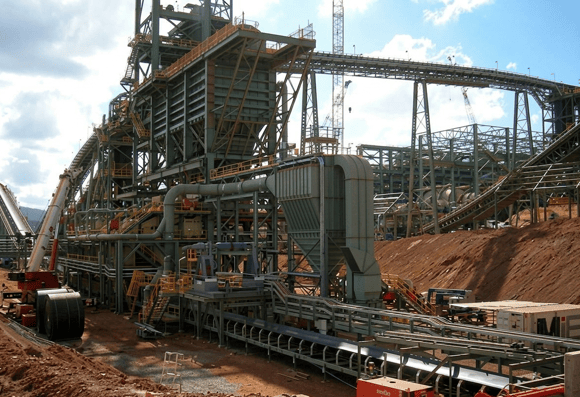
MikroPul has a broad installation base supporting critical mining operations, including:
- Crushers
- Screens
- Ball mills
- Truck dumps
- Conveyor transfers
- Bin filling
- Product loading for transport
- Autoclaves
We have developed deep process knowledge by supplying equipment to operations handling:
- Iron ore
- Nickel
- Copper
- Gold
- Silver
- Lead & Zinc
- Bauxite & Aluminum
- Coal (including PRB coal)
- Diamond
- Potash
- Molybdenum
Every material presents unique challenges — from stickiness and abrasiveness to fine particle size and moisture content. MikroPul evaluates:
- Physical material properties
- Dust loading levels
- Moisture content
- Operating temperatures
Based on these factors, we carefully select the optimal filter media and air-to-cloth ratio to ensure maximum performance and durability.
The True Cost of Dust in Mining
Mines and quarries are extremely dusty environments. Data from installations suggests that up to 1% of total throughput can be lost to the surrounding environment. For example, a 700 TPH quarry could lose approximately seven tons per hour from conveyors, crushers, and screens — excluding stockpile losses. Mining operations today face pressure from two critical directions:
Environmental Authorities
As suburban development expands closer to mines and quarries, visible dust emissions are no longer acceptable. Environmental agencies require:
- No visible dust beyond site boundaries
- Strict limits on particulate matter (PM) emissions
- Reduced dust fallout outside operational areas
Occupational Health & Safety
Employee health is equally critical. Workplace dust limits are typically:
- 15 mg/m3 for total dust
- 5 mg/m3 for respirable dust
Regulations for coarse and fine particulate matter continue to tighten, particularly in “non-attainment” regions.
For hazardous dusts such as crystalline silica, exposure limits are significantly lower to prevent long-term health risks. Effective dust control is essential to meet both environmental and occupational requirements while protecting profitability.
Guidelines for Practical Dust Control
Years of experience in mining and quarry applications have highlighted key principles:
- Good design and proper equipment selection are essential.
- Marginal design decisions quickly result in inadequate collector performance.
- Dust is generated anywhere material falls through air.
- Conveyor transfer points, crushers, screens, oversized feed-outs, and bin transfers are all significant dust sources.
- Budget matters — it is better to execute targeted solutions correctly than implement broad but ineffective systems.
Typical Dust Generation Areas
Dust collection systems are commonly applied to:
- Rail or truck dumps
- Crushers
- Screens
- Conveyor belt transfer points
- Silos or bin filling
- Rail, barge, or truck loading
Source vs. Central Dust Collection Philosophy
Two primary strategies are used in mining dust control:
Source Collection
Collectors are placed directly at the dust generation point, returning collected dust back into the original process stream. Advantages include:
- Lower capital costs (less ductwork and material handling equipment)
- Reduced maintenance complexity
- Fewer hoppers and discharge devices
- Minimal risk of plant-wide shutdown if one unit is offline
Centralized Collection
Dusty air is ducted to a centrally located collector, and collected dust is discharged as a separate process stream. This approach is often preferred when collected dust must be separated from the final product.
The optimal strategy depends on:
- Process characteristics
- Value of recovered dust
- Material handling requirements
- Maintenance considerations
Dust Collection Design Considerations
When selecting dust collectors for mining and quarrying, it is critical to consider:
- Abrasive particle impact on filter media
- Incoming air velocity
- Dust distribution and airflow patterns
- Hopper design to prevent blockages and bridging
- Material handling abrasion and secondary emissions
For source collection systems:
- Be aware of water or oil content that may affect filter media
- Position bin vent collectors away from direct inlet impact to minimize abrasion
- Evaluate dust loading to prevent premature wear
MikroPul Solutions for Mining Applications
MikroPul offers a comprehensive range of dust control technologies:
- Mikro-Pulsaire® pulse-jet collectors
- Reverse Air Filters (RAF II and RAF-IS for coal handling and combustible dust applications)
- Wet scrubbers
- Cyclones
- Cartridge collectors
Our solutions are engineered to maximize dust recovery, protect worker health, ensure regulatory compliance, and reduce material loss.
Contact us to create your custom solution
Call us at: 704-859-2723 or fill out the form below.